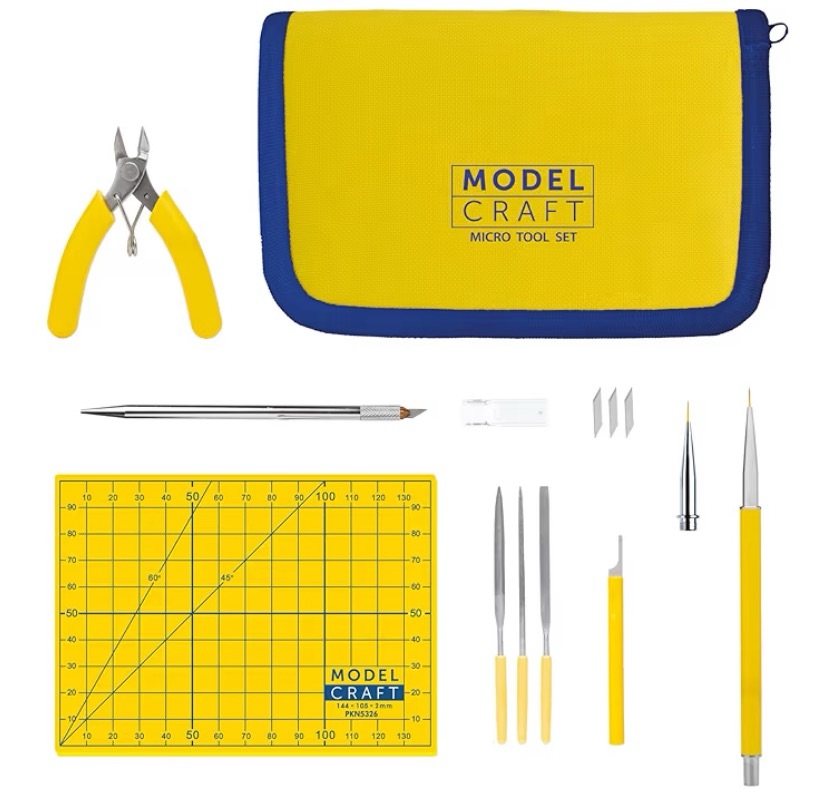
You do not need a workshop full of equipment to build a book nook. For many modern kits, a small collection of inexpensive tools is enough. The useful extras depend on whether you are assembling a well-engineered kit, making lots of miniature-house details, upgrading lighting or moving into custom builds. If you are ready to move beyond kits, see our complete guide to designing and building your own book nook from scratch.
The Starter Toolkit
- Tweezers: probably the most universally useful tool for small parts, paper details and awkward locations.
- Craft knife or precision cutter: for trimming tabs, paper and card. Always use it on a cutting mat.
- Small scissors: useful for printed paper, plants and fabric components.
- Cutting mat: protects the work surface and gives you a useful measured working area.
- Sanding sticks or fine files: clean tabs, remove small burrs and improve tight-fitting joints.
- Ruler: useful for measuring, cutting and checking alignment.
- Glue: the right adhesive depends on the materials. See our book nook glue guide rather than assuming one glue suits everything.
Some kits include basic tools or require almost no cutting and gluing, so check the contents before buying equipment you may not need.
Tools That Become Useful Very Quickly
- Small magnetic screwdrivers: extremely useful for the tiny screws used in hinges, battery boxes and fittings.
- Set square: one of the best additions for glued structures. A wall that starts slightly out of square can cause fit problems several stages later.
- Clips, clamps or elastic bands: hold glued structures while the adhesive sets.
- Magnifying lamp: useful for very small components and detailed work.
- Acrylic paint pens: excellent for colouring exposed wooden edges and touching up small details. See our acrylic pen guide.
Lighting and Electrical Work
For a standard pre-wired kit you may need nothing more than the supplied components. Custom lighting is different.
- Wire cutters/strippers: useful when adding or replacing LEDs.
- WAGO-style lever connectors: make some multi-wire connections far easier to manage. Read our WAGO connector guide.
- Soldering iron: useful for permanent custom wiring, but absolutely not a requirement for ordinary book nook building.
- Multimeter: useful when you begin diagnosing custom circuits or power problems.
Tools for Custom Builds
This is where the equipment list starts to grow — because you are no longer simply assembling what the manufacturer supplied.
- Cordless rotary tool: useful for drilling, cutting, shaping and polishing custom components.
- Mini electric screwdriver: convenient when a project uses numerous tiny screws and hinges.
- Heavier set squares and clamps: valuable when constructing walls and floors from scratch.
- Paints, stains and weathering materials: useful for disguising joints, changing finishes and ageing surfaces.
- Spare-parts storage: keep unused furniture, LEDs, acrylic pieces and decorative parts from previous kits. They frequently become useful in later projects.
What We Would Not Buy for a First Kit
Do not buy a soldering station, rotary tool, huge modelling toolkit or specialist electrical equipment simply because you are starting the hobby. Build one kit first. It will tell you far more about the tools that suit your preferred style of building.
A Practical First Setup
If the kit does not supply tools, a sensible starting set is tweezers, a cutting mat, a craft knife, small scissors, sanding sticks, a ruler and an appropriate glue. Add tools only when a particular build gives you a reason to need them.
Related Guides
Read our beginner mistakes guide, difficulty guide and glue guide. If you are moving beyond standard kits, our customisation and lighting sections contain more specialist techniques.
Copyright Book Nook Workshop 2026 – All rights reserved. (David Richards)
Leave a Reply