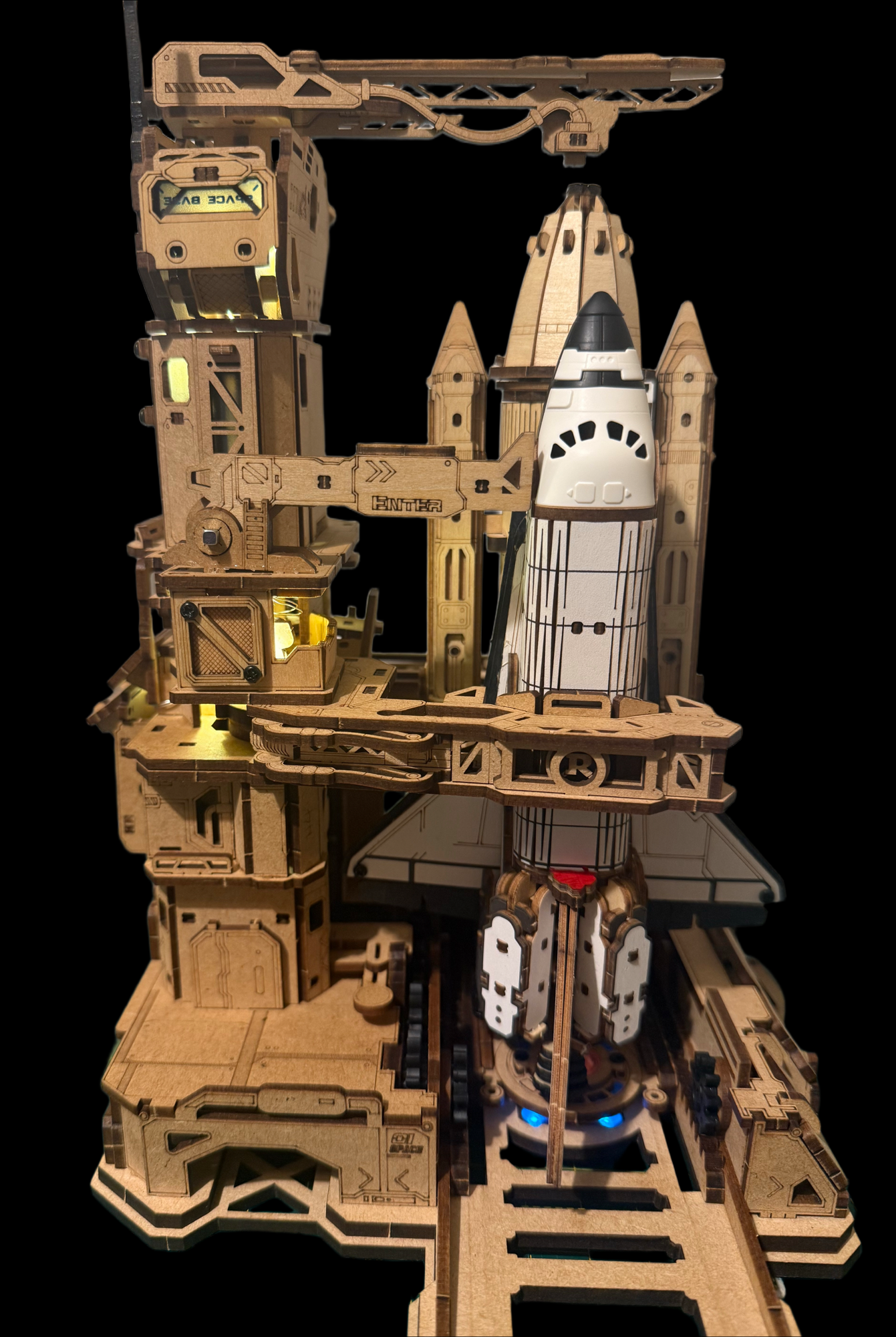
Choosing a book nook at the right difficulty level can make the difference between an absorbing project and a frustrating one. But after reviewing more than 100 kits, we have learned that the usual shortcuts — price, piece count and estimated build time — are poor ways to judge difficulty.
Two kits with similar dimensions can offer completely different building experiences. What matters is what the builder is actually being asked to do.
What Makes a Book Nook Difficult?
- Piece fit and tolerances: well-engineered tab-and-slot construction can make a complex-looking model straightforward; poor fit creates work at every stage.
- Instructions: clear sequencing can make a sophisticated kit accessible. Missing labels, unclear orientation or badly translated instructions can make a simple kit difficult.
- Fragile or tiny parts: thin wood, delicate acrylic, paper plants and miniature furnishings require patience and careful handling.
- Lighting and wiring: pre-wired modules are usually straightforward. Routing loose wires, making connections or diagnosing faults adds another skill.
- Alignment: mirrors, moving parts, doors, gears and layered structures can depend on precise positioning.
- Handmade details: miniature-house style kits may require cutting, folding, gluing, fabric work or making many individual objects.
- Problem solving: a kit becomes harder when the builder has to work out what the manufacturer intended.
What Does NOT Reliably Predict Difficulty?
Build time does not equal difficulty. A long build may simply contain lots of repetitive work. A short build can still contain a technically demanding stage.
Piece count does not equal difficulty either. Hundreds of accurately cut pieces can be easier to assemble than a much smaller number of poorly fitting or fragile components.
Price is equally unreliable. Expensive kits can be beautifully engineered and easy to assemble, while inexpensive kits can require considerable correction.
Our Five Experience Levels
| Level | What it means |
|---|---|
| Beginner | A forgiving first build with clear instructions, good fit and little specialist technique. |
| Experienced Beginner | Still approachable, but benefits from some familiarity with kit construction. |
| Intermediate | Requires more patience, precision or problem solving and may combine several construction techniques. |
| Advanced Intermediate | More demanding fit, detail, wiring, mechanisms or instructions; previous experience is valuable. |
| Expert | A genuinely demanding project where precision, persistence and confident problem solving are important. |
Does Your First Kit Have to Be Rated Beginner?
No. Some first-time builders are experienced modellers, crafters or engineers and may be perfectly comfortable starting higher. Equally, an experienced book nook builder may deliberately choose an easy kit because they want a relaxing project.
Difficulty is guidance, not a qualification test. The useful question is whether the type of work involved sounds enjoyable to you.
How to Choose Before You Buy
- Read an independent review of the specific kit rather than relying on the box description.
- Look for comments about instructions and piece fit.
- Check whether lighting is pre-wired or needs assembly.
- Decide whether you enjoy making lots of tiny decorative items or prefer engineered tab-and-slot construction.
- Look for mechanisms, mirrors, curved structures or other stages where alignment matters.
- Use build time as a planning guide, not as a difficulty rating.
Use the Review, Not the Marketing
Our Kit Reviews increasingly record difficulty separately from build time, alongside instruction quality, component quality, fit, lighting and overall score. That gives a much more realistic picture of the experience than a manufacturer simply labelling a kit “easy” or “advanced”.
Related Guides
See How Long Does a Book Nook Take to Build?, our common beginner mistakes, and our beginner kit guide.
The Bottom Line
The hardest-looking book nook is not necessarily the hardest to build. Good engineering can make an elaborate model surprisingly accessible, while poor instructions or fit can turn a modest design into a battle. Judge the actual construction experience — not the number on the box.
Copyright Book Nook Workshop 2026 – All rights reserved. (David Richards)
Leave a Reply