More Halloween Than Time!
Build #176 – built and reviewed by D.J. Gibson
Some miniature kits tell you exactly what you are about to build. Then there is the Zalugn Wheel of Time
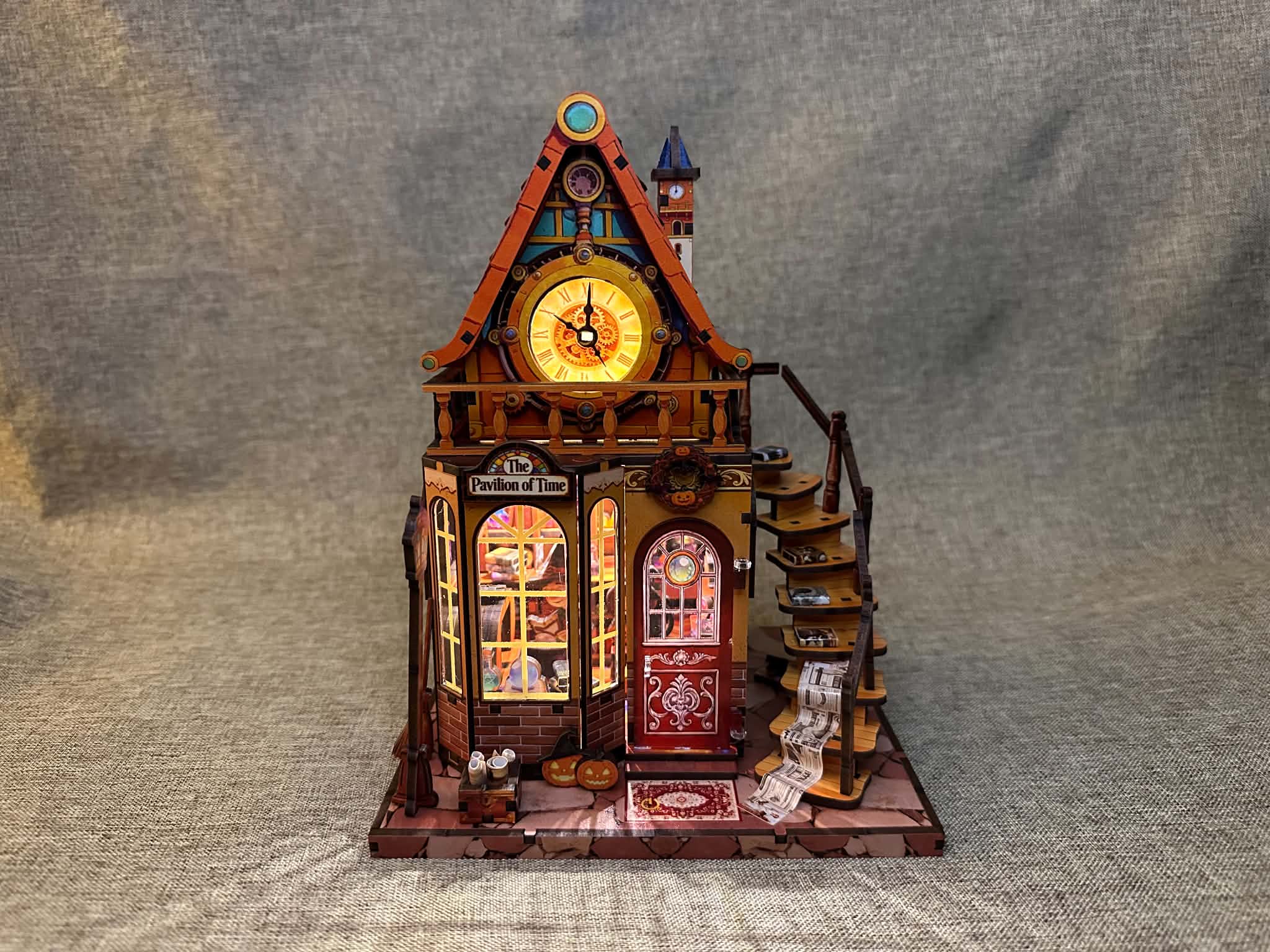
Despite its grand, time-travelling title, this is less science fiction and much more Halloween at the local magic shop. Pumpkins, a black cat, witches’ hats, broomsticks and magical paraphernalia fill a colourful little building crowned by an enormous illuminated clock.
Purchased from Amazon, the Wheel of Time is a compact printed-MDF miniature that took approximately seven hours to complete. That places it comfortably in our intermediate category: substantial enough to feel satisfying, without turning into a multi-day project.
Summary Table

Zalugn or Xalugn?
There is a small naming mystery before the build even begins. The Amazon listing and purchase information identify the brand as Zalugn, while the logo printed on the box appears to read Xalugn. The model number, however, is clearly XY-B06, and the kit name is Wheel of Time Magic House.
Whatever name is used, this is best understood as an open-sided miniature house rather than a conventional enclosed book nook. Its unusual shape allows the interior to be viewed from several angles, while the staircase and towering clock give it a distinctive display silhouette.
What’s in the Box?

The kit is made primarily from printed MDF, printed acrylic and glossy printed stickers. Much of the colour and surface detail is therefore supplied for you: roof tiles, flooring, brickwork and architectural decoration arrive ready printed rather than needing to be painted.
The colour instruction manual is relatively simple to follow, and most parts are easy to remove from their boards. The box also contains the acrylic pieces, decorative components and a straightforward electrical system.
A Logical, Surprisingly Solid Build
Construction follows a familiar sequence: walls and floor, the second storey, more walls and the roof. The completed house is then installed on its base before the external staircase and final decorative details are added.
I found the fit more snug than on many comparable kits. That can demand a little extra care while pieces are being pressed together, but it also has a welcome benefit: the finished model feels sturdier than many miniature houses.

The open architecture is one of the design’s strengths. Instead of relying on a single front-facing view, it encourages you to look through the door, windows and missing side wall. Shelves of books, potion bottles, magical ornaments, a witch and a black cat all reward closer inspection.
The Acrylic Needs Special Care
The printed acrylic proved to be the most troublesome part of the entire kit. Its printed surface wanted to peel or flake while pieces were being removed.
I normally push acrylic pieces out from the back, but that appeared to increase the peeling. Carefully pushing them from the printed front side helped reduce the problem. One acrylic component still snapped during removal, although it was easily repaired with glue.
Our advice is simple: slow down when you reach the acrylic sheets, support each piece close to its connection points and avoid flexing it. If you are new to miniature building, our book nook troubleshooting guide covers repairs and other common construction problems.
Simple, Sensible Lighting

The electronics are refreshingly straightforward. A pre-wired battery box with a physical on/off switch connects to a small control board, into which the touch-control panel and lights are plugged.
Illumination comes from two self-adhesive LED strips: one with three LEDs and the other with four. Remove the paper backing, position the strips as directed and connect them to the board. There is no soldering and no complicated wire routing.
The seven light points provide adequate illumination for both the shop interior and the large clock face. As always, test the complete system before hiding the wires or closing the structure.
Where Is the “Wheel of Time”?
There is obviously a huge clock. In fact, the illuminated dial dominates the upper half of the building. Beyond that, however, surprisingly little about the miniature suggests time travel.

Look more closely and you find pumpkins, jack-o’-lanterns, a witches’ broom, black cat, magical books, potion bottles and other supernatural decorations. Even the orange-and-black colour palette pushes the design firmly towards Halloween.
The sign above the window calls the building The Pavilion of Time, which arguably suits it better than the title on the box. Whatever we call it, the theme works visually. The pumpkin carriage, open front door and steep tiled roof give the model bags of personality.
A Halloween Display Piece With Year-Round Appeal

There is nothing to stop you displaying the Wheel of Time throughout the year, but its seasonal appeal is impossible to miss. Place it among autumn decorations and the amber clock, warm interior lighting, pumpkins and witches will look completely at home.
Its roughly seven-hour build time also makes it a realistic weekend project. It should suit builders who have completed a first kit and want something a little more involved. If you are still deciding where to begin, see our guide to choosing your first book nook kit.
Final Verdict
The Zalugn Wheel of Time XY-B06 may not deliver the time-themed miniature its name suggests, but what it delivers instead is arguably more fun.
It is a colourful, sturdy and relatively quick intermediate build with clear instructions and uncomplicated electronics. The snug MDF construction gives the finished building reassuring solidity, while the illuminated clock, external staircase and busy magical interior provide plenty of visual interest.
The fragile printed finish on the acrylic is the clear weakness. Treat those pieces much more carefully than usual and the rest of the build should be straightforward.
If you want an enormous architectural project, this is not it. If you fancy spending an enjoyable weekend building a quirky illuminated Halloween magic shop with a giant clock attached, the Wheel of Time is much easier to recommend.
Built and reviewed by D.J. Gibson for Book Nook Workshop. Read our Meet the Builder interview with D.J.
Leave a Reply