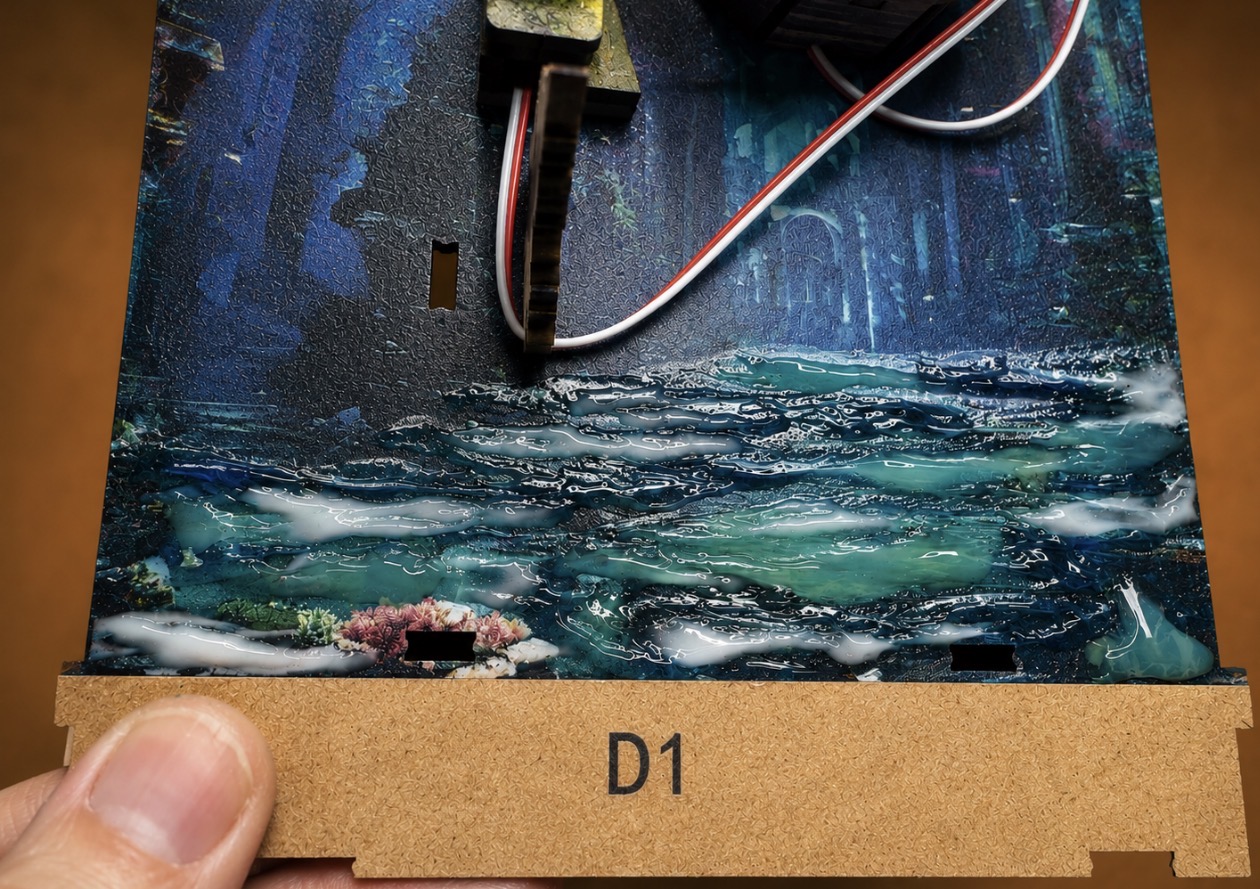
If there is one thing guaranteed to strike fear into the heart of a model builder, it’s not photo-etch railings, microscopic decals, or even that one missing part you accidentally inhaled three days ago. No, the true terror begins the moment someone says: “You know what this diorama needs? Water.”
Because suddenly, your peaceful little harbour scene becomes a full-scale civil engineering project somewhere between the North Sea and a kitchen sink disaster.
Enter the glorious miracle known as water gel paste.
Now, for the uninitiated, water gel paste is essentially wizardry in a tub. It’s a thick, gloopy substance that allows you to create realistic water effects in model scenes. Oceans, rivers, waterfalls, puddles, tidal surges, and for us Scots, a wee burn. Which, for those south of the border, means a small river — not an unfortunate accident involving boiling water and a kettle.
The beauty of these gels is that they come in a range of colours and shades. Turquoise, clear, white, light blue, dark blue — enough options to make your workbench look like Poseidon’s makeup drawer. And honestly, unless you’re recreating the entire Atlantic Ocean or attempting a scale model of Noah’s flood, a standard 50ml pot will last you quite a while.

At around £3–£6 a pot, they’re surprisingly affordable too. That is, until you discover how addictive they are and suddenly own seventeen tubs “just in case.” Most even come with a wee starter brush, which is very optimistic of the manufacturers. Because five minutes later you’ll be standing there using cocktail sticks, old credit cards, makeup brushes, and possibly your finger, muttering things like:
“No… the tide needs more aggression.”
Using the stuff is wonderfully straightforward — but don’t mistake “easy” for “idiot-proof.” This isn’t wall filler. You can’t simply slap it on like you’re repairing damp in a Glasgow tenement and expect award-winning waves.
You need a plan.
Ask yourself:
Are you creating a peaceful river gently flowing through a forest scene? Or are you unleashing a furious storm surge smashing against jagged rocks like the weather forecast on the west coast of Scotland every bank holiday weekend?
Texture matters.

Smooth strokes create calm water. Stabbing motions create foam and turbulence. Dragging the brush upward forms wave peaks. And somewhere during this process, you will absolutely ruin one brush forever. Accept it. It has given its life in service to realism.
As someone who already paints in watercolour, I found the transition to gel pastes surprisingly natural. If you’re new to them though, take your time. This is not a race. The key is patience and building up layers slowly.
And this is where many beginners go wrong.
They want tsunami-level waves immediately and end up with something resembling blue mashed potatoes.
No huge lumps.

If you want dramatic rolling surf, build it gradually over several applications. Let each layer dry before adding more. Think Michelangelo painting the Sistine Chapel, only with slightly more swearing and tiny plastic fishermen.
Officially, the instructions tell you to leave it for 24 hours between coats. Now, technically, that’s probably sensible advice from professionals who understand chemistry and liability insurance. In practice? I’ve found that after about 3–4 hours in a warm workspace, it’s usually dry enough to continue working.
That said, if I’m tackling a larger water section, I’ll often apply the gel at the end of the evening and leave it overnight. Mainly because it allows the gel to cure properly… but also because it prevents me from poking it every twenty minutes while whispering:
“Are you dry yet?”
One of the most satisfying things about water gel is how dramatically it transforms a build. A model without water can look lovely. Add realistic waves, reflections, foam, or a bubbling burn running under a bridge, and suddenly the whole scene comes alive.
It gains movement.
Atmosphere.
Drama.
And occasionally fingerprints because you forgot it was still drying.
Of course, there is always one danger with water effects. Once you realise how good they look, you start adding water to absolutely everything.
Tiny puddles in alleyways.
Wet cobblestones.
Flooded trenches.
Rain-soaked docks.
A suspiciously damp garden centre.
Before long, your modelling bench resembles the aftermath of a burst pipe.
Still, there are worse addictions in life.
And few things in this hobby are more satisfying than standing back, admiring your completed scene, and thinking:
“Aye… that’s a cracking wee burn.”
Copyright Book Nook Workshop 2026 – All rights reserved. (David Richards)
Leave a Reply