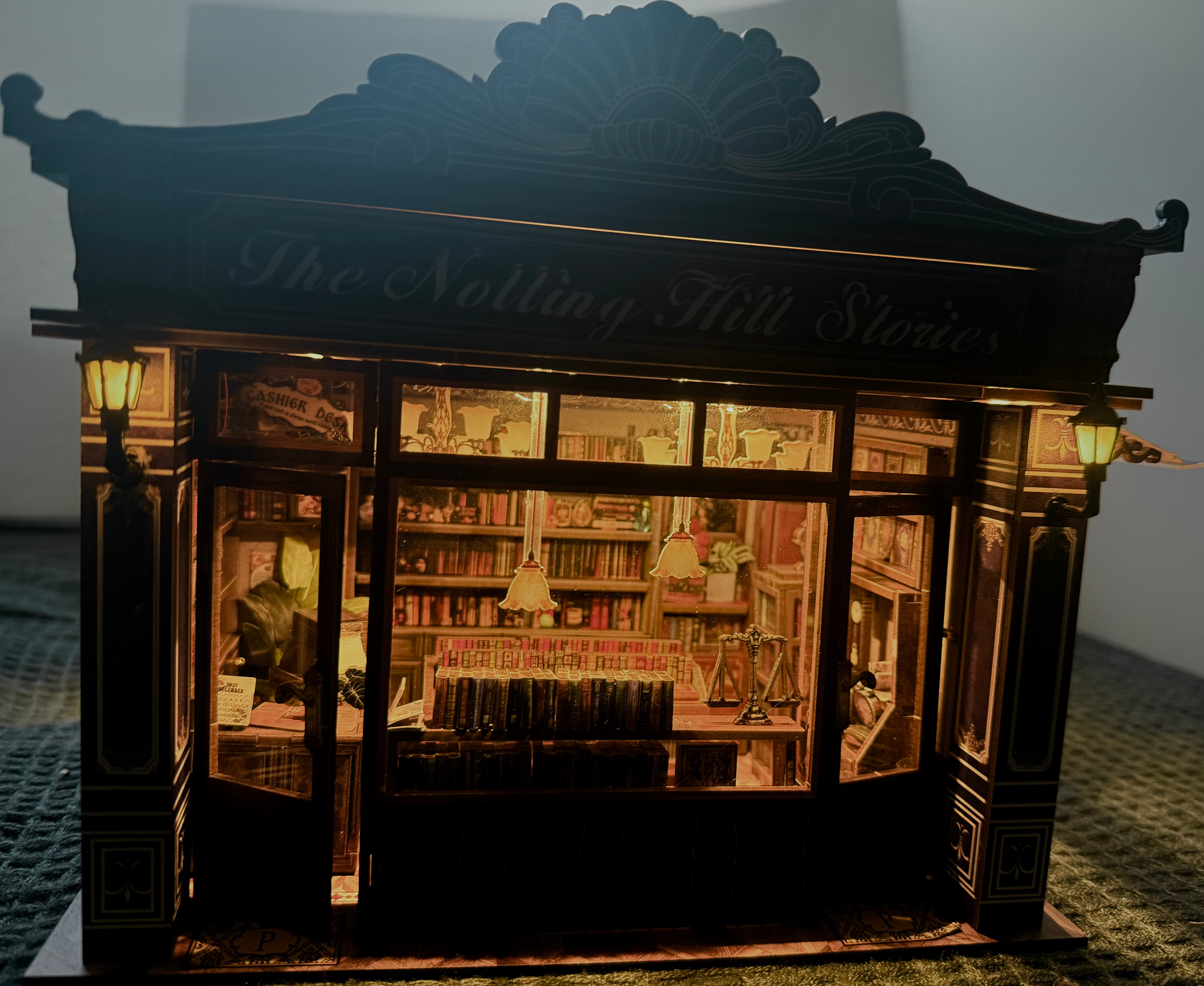
For many within the book nook hobby, ETKVR has rapidly become one of the most talked-about emerging brands in the community. Their kits have gained attention for dramatic lighting effects, cinematic atmosphere and increasingly ambitious designs that genuinely stand apart on a bookshelf.
What makes this interview particularly interesting is that opportunities like this are exceptionally rare.
Most builders only ever experience the finished product sitting in front of them surrounded by MDF dust, glue strings and tiny LED wires. Very few get the opportunity to hear directly from the designers themselves about how these miniature worlds are actually imagined, tested and refined before release.
As Book Nook Workshop continues to grow internationally, opportunities such as this are becoming increasingly important for hobbyists wanting genuine insight into the companies shaping the future of the miniature world. One thing Book Nook Workshop prides itself on is being at the front of the queue when it comes to emerging products, exclusive information and behind-the-scenes access, helping bring unique content and industry insight directly to builders around the world.
Book Nook Workshop recently had the chance to speak directly with an ETKVR designer about creative inspiration, hidden design details, structural compromises, future technology and where the hobby itself may be heading next. Due to both language and location differences, the interview was conducted through a series of written questions and responses.
“I Feel More Like an Artist”

One of the most revealing moments came early in the discussion when the designer was asked whether they viewed themselves primarily as an artist, engineer or storyteller.
The answer came immediately:
“I feel more like an artist.”
That single response explains a great deal about ETKVR’s overall approach. Their kits often appear to prioritise atmosphere, visual storytelling and emotional impact first, with engineering solutions developed afterwards to support the creative vision.
According to the designer, most ETKVR concepts begin not with mechanics, but with an image, a mood or a scene they want the builder to experience.
Sometimes inspiration comes from films. Other times it emerges entirely from imagination.
That creative-first philosophy is particularly interesting because many modern book nook manufacturers increasingly focus on assembly simplification and production efficiency. ETKVR openly admits that visual ambition frequently comes first — even when it creates significant structural challenges later in development.
The Hidden Reality of Book Nook Design
One of the most valuable insights from the interview was the honest explanation of how difficult structural refinement can become during development.
The designer explained that some visually impressive features simply cannot survive engineering modifications. If a particular design weakens structural stability or prevents reliable assembly, entire sections may need redesigned or removed altogether.
It is a surprisingly candid answer — and one experienced builders will immediately understand.
Book nook fans often assume frustrating assembly sections are accidental. In reality, many complicated areas exist because designers are attempting to preserve visual effects they are reluctant to lose.
The ETKVR designer also revealed that each kit typically undergoes between two and three full prototype builds before final approval for production.
The “Hidden Details” Most Builders Never Notice

Another particularly charming part of the discussion involved hidden design details and Easter eggs intentionally placed throughout certain kits.
ETKVR admitted that many tiny features are added purely for observant builders, despite knowing a large number of customers may never even notice them.
That small detail says quite a lot about the miniature hobby itself.
Unlike ordinary display pieces, book nooks are assembled at extremely close range. Builders spend hours studying every shelf, sign, poster, window and decorative corner during construction. Designers clearly understand that level of intimate interaction.
Lighting Is Becoming Increasingly Ambitious


Lighting remains one of ETKVR’s defining characteristics, and the interview revealed that illumination design becomes a major focus surprisingly early in development.
Once the first functional prototype is assembled and internal lighting installed, adjustments begin almost immediately to improve atmosphere, visibility and overall visual balance.
The designer identified KT05 Bloody Hotel and KT06 Magic Castle as the company’s most technically challenging lighting projects so far due to the complexity, density and precision required throughout the systems.
For anyone who has assembled heavily illuminated kits before, that admission will come as little surprise.
ETKVR Wants to Push Beyond Traditional Book Nooks
Perhaps the most fascinating part of the discussion focused on the future of the hobby itself.
The designer openly discussed ambitions involving:
– Mechanical movement
– Interactive structures
– Advanced synchronised lighting
– Sound integration
– Moving components working together dynamically
One concept mentioned was particularly ambitious: A library-themed book nook containing a functioning clock synchronised directly with mobile phone time.
That begins pushing beyond traditional static displays and moves much closer toward interactive miniature engineering.
Community Feedback Clearly Matters
Another major takeaway from the interview was ETKVR’s attitude toward community criticism and customer feedback.
The designer specifically stated that Facebook groups, YouTube reviews and wider hobby discussions are actively monitored because customer opinions are considered “the most genuine.”
More importantly, they openly acknowledged that negative reviews are taken seriously and frequently influence improvements in future products.
That level of honesty is something many hobbyists will appreciate.
One of my reviews that I share with ETKVR
A Hobby That Became Global Faster Than Anyone Expected
One of the more human moments in the interview came when the designer admitted they never fully expected book nooks to become such a global hobby phenomenon.
At the same time, they openly expressed hopes that ETKVR itself could eventually grow into a recognised international brand within the hobby industry.
Final Thoughts
What makes this interview genuinely interesting is its openness.
ETKVR did not attempt to portray book nook design as simple or effortless. Instead, the discussion revealed the constant balancing act between artistic ambition, engineering limitations and practical assembly considerations.
More importantly, it revealed a company that appears genuinely interested in pushing the hobby forward creatively and technologically.
Book Nook Workshop is not affiliated with ETKVR Sile Crafts. We are extremely grateful to the company and its team for providing access for interviews and additional insights into the design process behind their products.
We are hopeful that we will be in a position to bring further news to the community following ongoing discussions with the company.
Inside ETKVR Offices
Copyright Book Nook Workshop 2026 – All rights reserved. (David Richards)
Leave a Reply