
The future of the book nook industry
The next five years are likely to transform the book nook industry more than the previous ten.
What began as a niche hobby has evolved into a genuinely global industry, with manufacturers investing in automation, original design, smart electronics and international expansion. As competition increases and customer expectations rise, the companies that succeed will be those that innovate rather than simply imitate.
Automation and Manufacturing Efficiency

The majority of book nook kits are currently produced using laser-cutting technology, but the level of automation varies considerably between manufacturers. Larger, more established players such as Robotime operate at a significant industrial scale — with over 60 professional production lines and output exceeding 20 million pieces per month — while smaller OEM factories still rely heavily on manual labour for finishing, quality control and packaging. Robotime US
As the market grows and competition intensifies, pressure on margins will push more manufacturers toward greater automation across the full production pipeline: not just cutting and engraving, but painting, pre-finishing of components, automated quality inspection, and smarter packaging lines. The brands that invest in this infrastructure earliest will be best placed to offer higher consistency at lower price points — potentially squeezing out mid-tier manufacturers who cannot match either the quality of premium brands or the price of high-volume commodity producers.
AI-Assisted Design

Perhaps the most transformative near-term development will be the use of artificial intelligence in the design process. Book nook design currently requires skilled human designers to balance aesthetics, structural integrity, laser-cut tolerability, assembly logic and the experiential flow of a build. This is time-consuming and expensive, which is one reason why the total number of genuinely original designs on the market remains relatively limited compared to the number of brands selling them.
AI design tools are already capable of generating detailed miniature architectural concepts, and as these tools become more integrated with CAD and laser-cutting workflows, we can expect design cycles to shorten dramatically. This could be a significant leveller: smaller brands and independent designers who currently cannot compete with the R&D budgets of companies like Robotime or CUTEBEE may be able to bring original designs to market far more quickly and cheaply. The risk, however, is a flood of lower-quality, algorithmically generated designs that dilute the market and make it harder for genuinely creative work to stand out.
3D Printing
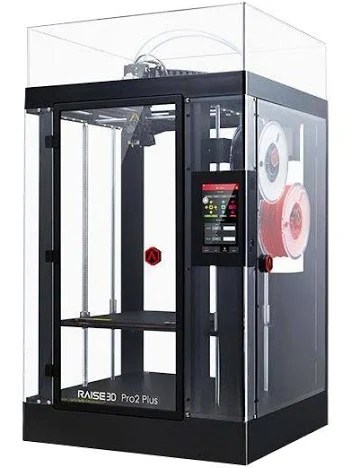
For individual builders, desktop FDM and resin printers have already opened up a significant creative frontier. Hobbyists are using them to produce custom furniture, figures, signage, architectural details and accessories that would be impossible to achieve with laser-cut wood alone — tiny gargoyles, curved staircases, miniature bottles, ornate lamp posts — the kinds of intricate three-dimensional details that give a finished book nook its sense of depth and authenticity. Communities on Reddit, Etsy and Printables have built up substantial libraries of freely shared and commercially available book nook STL files, meaning that a builder with a printer and some imagination now has access to an almost unlimited catalogue of add-on components.
At the commercial end, 3D printing is beginning to influence how manufacturers approach the more complex decorative elements of their kits. Rather than approximating a curved surface with layered laser-cut plywood — a compromise that experienced builders will recognise immediately — manufacturers can now produce genuinely curved, sculptural components using resin printing at relatively low cost. Some premium kit makers are already incorporating 3D-printed resin parts alongside their traditional laser-cut wooden components, and this hybrid approach is likely to become more common as resin printing costs continue to fall and output quality continues to improve.
The longer-term implications are more disruptive still. As AI design tools, parametric modelling software and consumer-grade 3D printers become more capable and more accessible, the barrier to creating an original, professionally finished book nook design from scratch will continue to fall. Although still likely to remain a niche market for some time, it is now entirely conceivable that some hobbyists will choose to purchase downloadable designs rather than complete physical kits, printing components at home or through local print services while sourcing standard materials such as LEDs, wiring and adhesives separately. This would represent a fundamental shift in the commercial model of the industry, and one that established manufacturers who rely on proprietary physical kits as their core product would need to adapt to carefully. The brands most likely to survive such a transition are those that have built their value around design creativity, community and customer experience rather than around the physical product alone.
Booknook Workshop Observation
It is worth remembering, however, that technology alone does not create a great book nook. Original storytelling, thoughtful engineering, intuitive assembly instructions and an enjoyable building experience remain qualities that cannot simply be generated automatically. Artificial intelligence and 3D printing are likely to become increasingly powerful tools within the design process, but the companies that combine these technologies with genuine creativity and craftsmanship are likely to remain the industry’s long-term leaders.
Moving and Animated Elements
One of the clearest trajectories in premium book nook design is the move from static scenes to animated ones. Tonecheer has already pushed this envelope considerably, with kits that incorporate motorised spinning figurines, touch-activated music boxes and conveyor belt mechanisms. BookNookGlobal / Viendor has developed what it describes as “animated book nooks” featuring moving elements alongside warm lighting and detailed scenes.
As miniature motor technology becomes cheaper and more reliable, and as consumer expectations rise, animated elements are likely to become a standard feature of mid-to-premium tier kits rather than a differentiating luxury. The challenge for manufacturers will be integrating these mechanisms in ways that are reliable enough to survive long-term display, simple enough to assemble without frustration, and quiet enough not to become irritating in a home environment. Brands that solve all three of those problems convincingly will have a significant competitive advantage.
Better Lighting and Smart Electronics
Lighting has already evolved considerably — from simple battery-powered LED strips to touch-activated systems, colour-variable lighting and USB-C power options. The next stage is likely to involve smarter, more integrated electronics: individually addressable LEDs that create dynamic lighting effects such as flickering candles or moving sunlight, app-controlled colour and brightness, and potentially even sound integration that responds to ambient conditions or time of day.
The main barriers here are cost, assembly complexity and battery life. A book nook with ten individually controllable LED zones and Bluetooth connectivity sounds compelling on paper, but if it requires a difficult wiring process during assembly or burns through batteries in a week, the customer experience suffers. The brands most likely to succeed in this space are those, like Tonecheer, that already have engineering expertise embedded in their design teams, and are accustomed to balancing technical ambition with accessible assembly.
Officially Licensed Products

The book nook format is an almost ideal canvas for licensed intellectual property. A miniature Diagon Alley, a recreated scene from a beloved novel, a tiny version of a famous film set — the emotional connection these products can generate is enormous, and the gifting potential is obvious. Tonecheer has already demonstrated this with its Harry Potter-licensed product for the Chinese domestic market, sold under the XIRON brand, and it seems likely that we will see significantly more officially licensed book nook products in the coming years.
The challenge is cost. Licensing fees from major IP holders such as Warner Bros., Disney or Tolkien Enterprises are substantial, and they typically require guaranteed minimum royalties, strict quality controls and compliance auditing — all of which add complexity and cost that smaller manufacturers are not equipped to absorb. This means that officially licensed products are likely to remain the preserve of larger, well-capitalised brands. It also creates an interesting dynamic in which smaller brands continue to produce products that are clearly inspired by popular fictional worlds without crossing into licensed territory — a legal grey area that IP holders may become increasingly aggressive about policing as the market grows.
Sustainability
Environmental concerns are beginning to register in the book nook industry, though progress has so far been modest. Most manufacturers use plywood as their primary material, and some — including Robotime — have pursued FSC certification to verify that their wood is sourced from responsibly managed forests. However, the broader sustainability picture is more complicated. The small plastic components, synthetic adhesives, LED wiring and acrylic dust covers found in most kits add up to a meaningful amount of non-recyclable waste, and the packaging used by many brands is far from minimal.
Consumer awareness of these issues is growing, particularly among the younger adult demographic that makes up a significant portion of the book nook market. Brands that can credibly demonstrate sustainable sourcing, reduced plastic use, recyclable packaging and longer-lasting electronics will have a genuine marketing advantage as this awareness increases. This is also an area where brands based outside China — where environmental regulation and consumer expectations around sustainability are sometimes more stringent — may be able to differentiate themselves meaningfully.
New Manufacturers Outside China
The global book nook industry has been almost entirely dominated by Chinese manufacturers, but this is beginning to change. The most significant example is BookNookGlobal / Viendor, the Vietnamese brand that has grown from a small workshop of three engineers and architects in 2019 to an internationally distributed brand featured on national television and operating in over 20 countries. Their trajectory demonstrates that it is entirely possible to build a competitive, design-led book nook brand outside China — and that consumers are willing to pay for it.
Vietnam is the most obvious emerging manufacturing base. Its woodworking and craft manufacturing traditions are well established, labour costs remain competitive, and its geographic proximity to major shipping routes makes export logistics manageable. Other Southeast Asian countries with strong craft manufacturing bases — Thailand, the Philippines, Indonesia — could also emerge as sources of book nook products, particularly at the handcrafted, artisan end of the market where the “made in” story carries genuine value.
It is also worth noting the growing number of independent designers and small-batch producers in Europe, North America and Australia who are creating original book nook designs, often sold through Etsy or their own websites, using locally sourced materials and desktop laser cutters. These makers are unlikely to challenge Chinese volume manufacturers on price, but they occupy a genuinely distinct niche — original, limited-edition, often customisable — that appeals to a different type of buyer.
Increasing Competition and Market Consolidation
Perhaps the most significant force shaping the near-term future of the book nook industry is simple competitive pressure. The market has attracted a large number of new entrants in a short period of time, and the result is an increasingly crowded field in which differentiation is becoming harder to achieve and margins are being compressed.
At the commodity end of the market — the $20 to $40 kits sold through Amazon, Temu and AliExpress — competition is already fierce, with dozens of brands selling near-identical products and competing primarily on price and advertising spend. This is unsustainable for many of the smaller players, and consolidation seems likely: some brands will exit the market, others will be absorbed into larger operations, and the OEM manufacturers who supply multiple brands may find that their direct-to-consumer arms gradually cannibalise their wholesale business.
At the premium end, the dynamics are different. Brands like Tonecheer, CUTEBEE, BookNookGlobal / Viendor and Anavrin are competing on design quality, build experience, community and innovation rather than price alone. This is a more defensible position, but it requires continuous investment in new designs, better materials and stronger customer relationships. The brands that build genuine communities — through social media, affiliate networks, build-along events and customer support — are likely to prove more durable than those that rely purely on product novelty.
Final Thought
Ultimately, the book nook industry is maturing. The explosive growth phase, in which almost any new product found an eager audience simply by existing, is giving way to a more discerning market where quality, originality and brand trust matter more than they once did. For manufacturers, designers and retailers who can navigate that transition thoughtfully, the long-term opportunity remains substantial. For those who cannot, the next few years may be significantly more challenging.
Copyright Book Nook Workshop 2026 – All rights reserved. (David Richards)
Leave a Reply