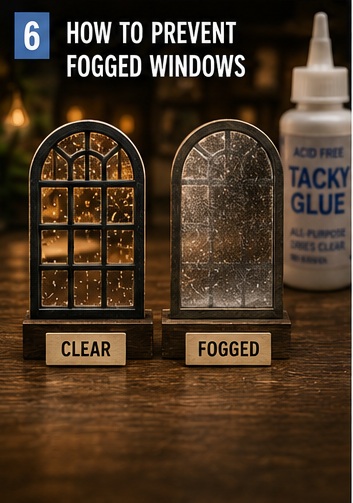
1. Avoid Superglue Near Clear Plastic
This is the biggest cause of fogging.
Instead use:
- PVA glue
- Clear craft glue
- Canopy glue
- Tiny amounts of double-sided tape
These are far safer for transparent parts.
2. Remove Protective Film Properly
Many builders accidentally leave part of the protective film attached.
Check both sides carefully:
- Some films are almost invisible
- Corners can be difficult to lift
- Static can attract dust instantly
Half-removed film often looks like scratches or fogging.
3. Handle Windows by the Edges
Clear acrylic shows fingerprints immediately.
Helpful tricks:
- Wear cotton gloves
- Hold edges only
- Clean before installation
Once trapped inside the structure, fingerprints become surprisingly irritating.
4. Clean Before Final Assembly
Before sealing walls:
Use:
- Microfibre cloth
- Glasses-cleaning cloth
- Acrylic-safe cleaner
Avoid:
- Paper towels
- Abrasive cloths
- Strong solvents
Thin acrylic scratches very easily.
How to Fix Existing Fogging
5. Polish Light Haze Carefully
Minor cloudiness can sometimes be improved.
Try:
- Microfibre cloth
- Plastic polish
- Acrylic polish
- Very gentle buffing
Do not scrub aggressively.
6. Replace Badly Damaged Windows
Sometimes replacement is easier.
You can often use:
- Clear packaging plastic
- Acetate sheets
- Overhead projector film
- Spare acrylic sheets
Many builders quietly replace kit windows for better clarity anyway.
7. Hide Minor Fogging with Lighting
Warm lighting can actually disguise small imperfections.
Ironically:
- Tiny reflections
- Interior shadows
- Ambient glow
…often make small flaws almost invisible once the nook is on a bookshelf.
8. Watch for Glue Smears
PVA glue dries clearer than superglue but can still leave marks.
Best practice:
- Apply with toothpick
- Use minimal amounts
- Remove excess immediately
With windows, less glue is almost always better.
Common Mistakes
The most frequent causes of cloudy windows are:
- Using too much superglue
- Removing protective film too early
- Trapping dust inside
- Cleaning with rough cloths
- Touching the centre repeatedly during assembly
Book nook windows attract fingerprints with supernatural efficiency.
Emergency Builder Trick
If a window already looks terrible:
Consider:
- Frosting it intentionally
- Adding curtains
- Using stained-glass film
- Creating a weathered effect
Sometimes a “mistake” becomes accidental atmosphere.
The Secret Nobody Mentions
Once the book nook is lit and sitting on a shelf, most tiny window imperfections become almost invisible.
Meanwhile, the builder will continue noticing them forever because they know exactly where they are.
Leave a Reply