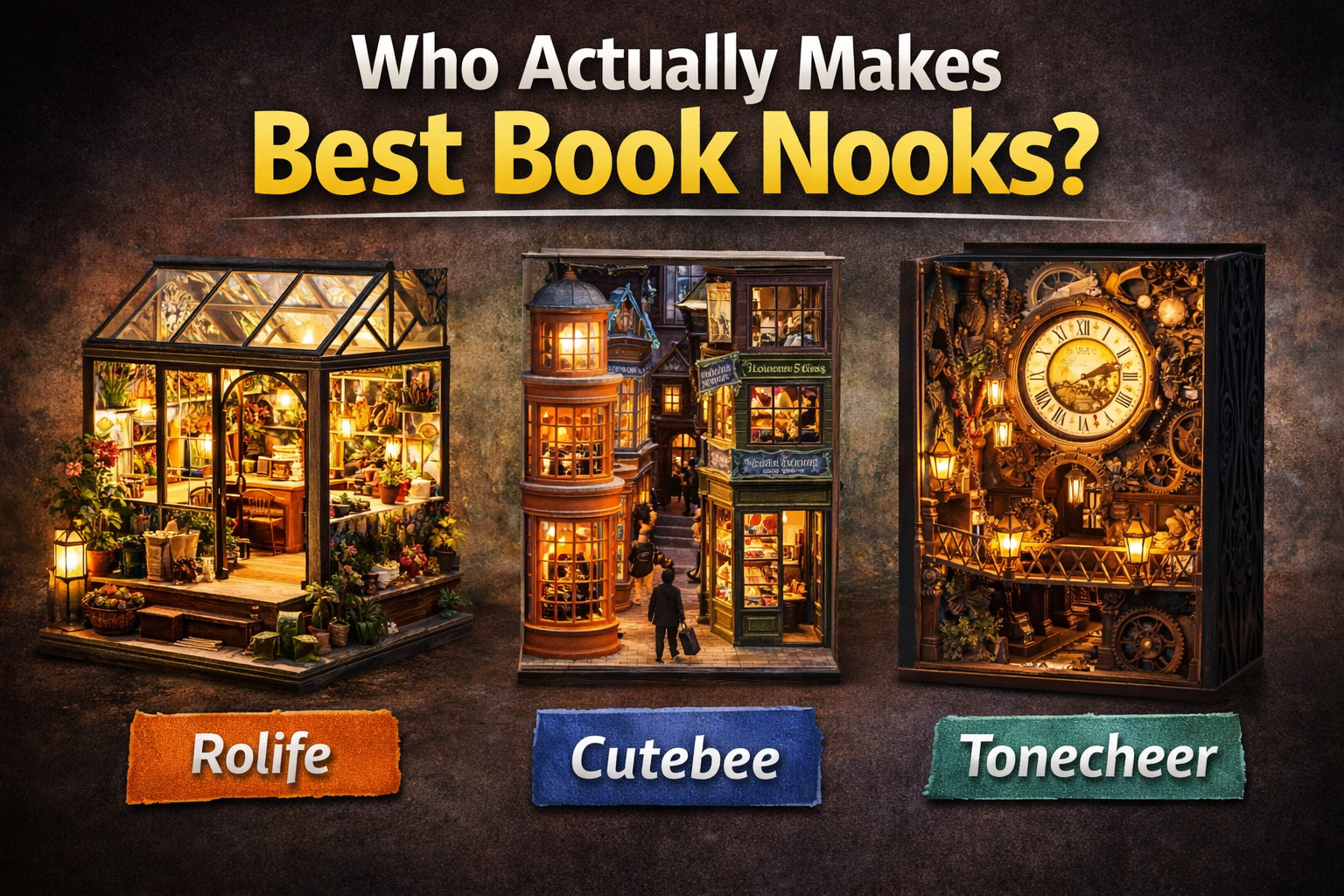
If you’ve spent more than five minutes browsing book nook kits on Amazon, Temu, or AliExpress, you’ve probably noticed something odd…
Why do so many kits look identical—but have completely different brand names?
Short answer:
Because most of them are identical.
Long answer? Let’s break down who actually makes these kits—and who’s just putting a different label on the same box.
🏭 The Reality of the Book Nook Industry
Unlike big hobby markets (like LEGO or model railways), the book nook world is still relatively small—and heavily concentrated in a handful of factories.
That means:
- A few companies design and manufacture
- Many others simply rebrand and resell
- The same kit can appear under 5–10 different names
Once you see it, you can’t unsee it.
🔝 The Main Book Nook Manufacturers (The Real Ones)
These are the companies actually designing and producing their own kits.
🧩 Robotime (Rolife / ROKR)
If you’ve built even one kit, you’ve probably come across Rolife or ROKR.
They’re part of Robotime, and they are:
- The biggest global manufacturer
- Proper product designers (not resellers)
- Known for strong instructions and reliable quality
You’ll still see their kits everywhere—but that’s because they wholesale, not because they’re being copied.
👉 Think of them as the closest thing the hobby has to a “big brand”
🧩 Cutebee
Cutebee has quietly become one of the most consistent names in book nooks.
They:
- Design their own kits
- Sell both direct and via Amazon
- Have solid quality control
Their kits tend to feel more “complete” out of the box—less improvisation needed.
👉 A very safe choice if you want a smooth build
🧩 Tonecheer
Tonecheer sits slightly more on the premium/experimental side.
They’re known for:
- More complex builds
- Moving parts
- Creative designs
👉 Not always beginner-friendly—but often more interesting
🧩 Mini City (Smaller but Legit)
Less well-known, but still a genuine manufacturer.
- Fewer listings
- Less mass-market presence
- Often better consistency than random Amazon brands
🟡 The “Grey Area” Brands
This is where things get confusing.
🧩 Atuban / ASLOWSNAIL (and similar)
These appear to be:
- Factories or factory-linked brands
- Using multiple names for similar products
You’ll often see:
- The same kit
- Different brand names
- Different prices
👉 Not necessarily bad—but definitely not transparent
🔴 The Resellers (Most of What You See)
Here’s the bit most people don’t realise:
Many “brands” on Amazon are not manufacturers at all.
They are:
- Resellers
- Dropshippers
- White-label brands
Examples include:
- Spilay
- Flever
- Various random brand names that only exist on Amazon
🤯 Why Everything Looks the Same
Here’s how it typically works:
Factory designs a kit
→ Multiple companies buy it
→ Each sells it under a different name
→ Prices vary wildly
So that beautiful Japanese house kit you saw?
- It might exist under 5 different brands
- With prices ranging from £25 to £60
- With identical parts inside
⚠️ How to Spot a Reseller Kit
Here are some quick tells:
- No official website
- Only sold on Amazon/Temu
- Same photos appear under multiple brand names
- Vague or inconsistent branding
- Overly long product titles (you know the ones…)
👉 “DIY Miniature House Kit Fairyland Dollhouse Music Box Creative Gift Bookshelf Decoration…”
Sound familiar?
✅ How to Buy From Actual Manufacturers
If you want a more reliable experience, stick to:
- Official brand websites
- Known manufacturers (Robotime, Cutebee, Tonecheer)
- Reputable hobby retailers
You’ll usually get:
- Better instructions
- More consistent quality
- Proper customer support
🧠 Honest Verdict
This isn’t about saying reseller kits are bad.
In fact:
- Many are great value
- Some look fantastic when finished
- You can still have a brilliant build experience
But…
👉 You’re often buying the same product at different prices
👉 And quality/support can vary depending on the seller
🧩 Final Thought
Once you realise how this market works, it changes how you shop completely.
Instead of asking:
“Which brand is best?”
You start asking:
“Is this actually a different kit—or just a different label?”
And that’s where the real value is.
If you’ve built kits from different “brands” that turned out to be identical, I’d love to hear about it—those comparisons are where things get really interesting.
:::
Copyright Book Nook Workshop 2026 – All rights reserved. (David Richards)
Leave a Reply