If you’ve spent any time building book nooks, you’ll know one thing pretty quickly:
There’s no single “hardest kit.”
What feels incredibly difficult to one builder might be straightforward to another. Someone who enjoys wiring will happily tackle lighting kits, while someone else might struggle just getting walls aligned.
So instead of chasing one mythical “hardest book nook,” the better question is:
👉 What actually makes a book nook difficult?
Once you understand that, you can spot challenging kits instantly—and avoid builds that turn into frustration. (ROKR mechanical models are excluded as they are a slightly different build)
What Makes a Book Nook Difficult?
Most difficult kits share a combination of the same core problems.
1. Glue-Heavy Construction
Kits that rely entirely on glue (rather than slot-together parts) are immediately harder.
There’s no room for error:
- Misalign something early → it affects everything later
- Too much glue → visible mess
- Too little → weak structure
👉 Using the right adhesive makes a huge difference (see my guide to the best glue for book nooks).
2. Tiny, Fiddly Pieces
This is where many builders struggle.
Some kits include:
- Mini books
- Bottles
- Signs
- Decorative clutter
All of which are tiny.
You’ll often need tweezers, a steady hand, and a lot of patience.
3. Poor Instructions
A simple kit can feel impossible with bad instructions.
Common issues:
- Tiny diagrams
- Missing steps
- Confusing sequencing
👉 Bad instructions can turn even a simple kit into one of the hardest builds.
4. Wiring and Lighting
Lighting adds atmosphere—but also complexity.
Challenges include:
- Fragile wires
- Tight routing spaces
- Mistakes that are hard to fix once sealed
If you’re not comfortable with basic electronics, this can quickly become the hardest part of a build.
5. Tight Layouts and Dense Designs
Some kits pack a huge amount into a small space.
That means:
- Hard-to-reach areas
- Limited room for adjustments
- Errors that are very visible
These designs look amazing—but they’re not forgiving.
6. Fragility and Fit Issues
Some kits are difficult simply because they’re not forgiving.
- Parts can snap or bend easily
- Structures may collapse during assembly
- Poor fit can make alignment frustrating
👉 This is often what turns a build from relaxing into frustrating.
⏱️ Time Commitment (The Hidden Difficulty)
Some kits aren’t technically difficult—but the sheer time involved makes them feel hard.
- 6–8 hours → manageable
- 15–20+ hours → starts to feel like a challenge
👉 Long builds increase fatigue, which leads to more mistakes and frustration.
The Book Nook Difficulty Score (Simple System)
To make things clearer, you can rate any kit using this simple system:
Score each category from 0–2:
- 0 = Easy
- 1 = Moderate
- 2 = Difficult
Categories:
- Glue Intensity
- Piece Size & Detail
- Instructions Quality
- Wiring & Electronics
- Overall Complexity
👉 Total score out of 10
Difficulty Levels:
- 🟢 0–3 → Beginner
- 🟡 4–6 → Intermediate
- 🔴 7–8 → Advanced
- 🔥 9–10 → Expert
Examples of Challenging Book Nook Kits
These aren’t officially “the hardest,” but they’re well known for combining multiple difficulty factors.
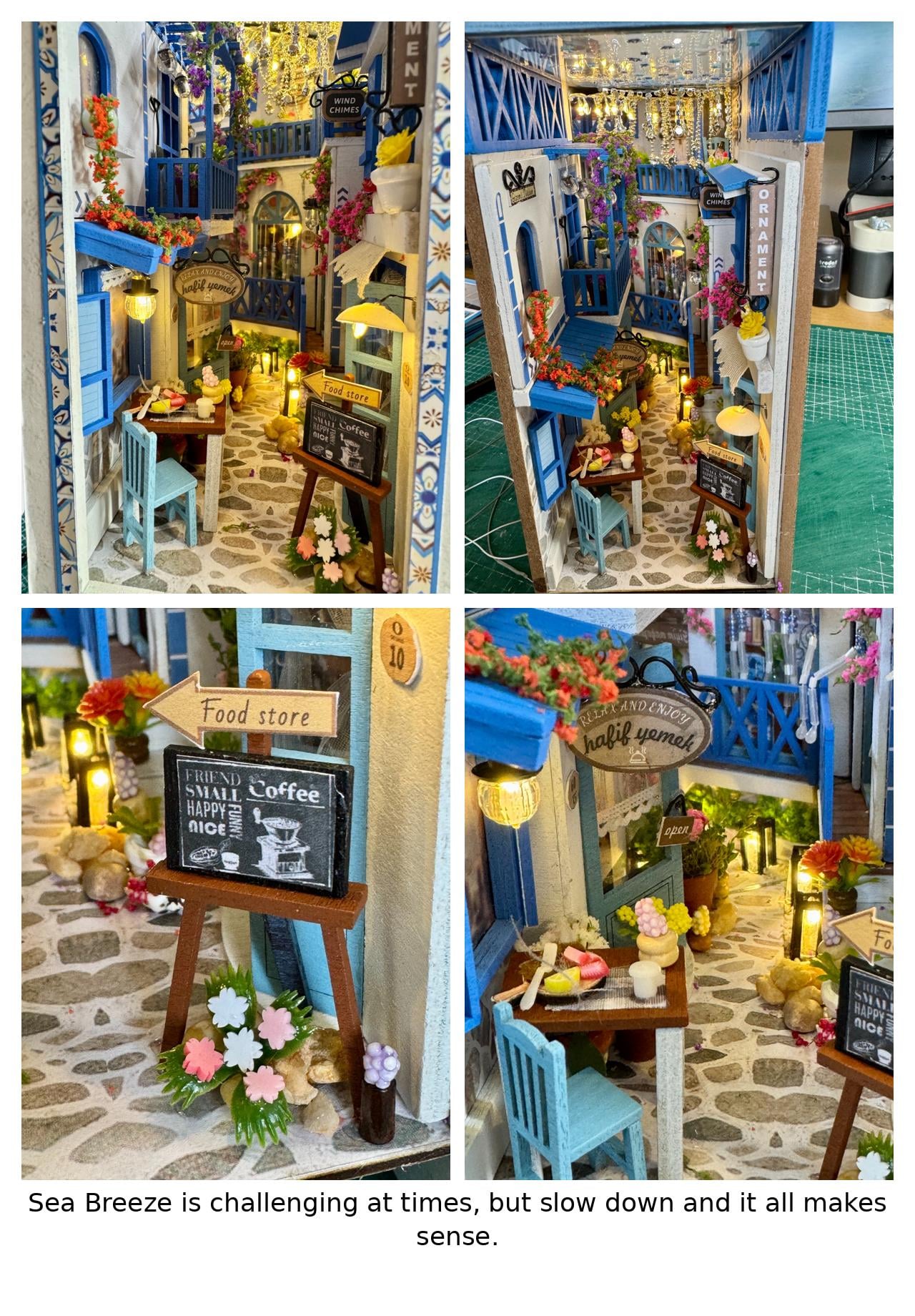
Cutebee Sea Breeze

Cutebee Sea Breeze Book Nook Kit (available from many brands)
This one looks calm and relaxing—but it’s anything but.
Why it’s difficult:
- Huge number of tiny decorative pieces
- Very fiddly assembly
- Heavy reliance on precise gluing
👉 This is often where builders realise book nooks aren’t always “easy crafts.”
👉 Check out the price on Amazon
Difficulty Score: 7/10 🔴
Tonecheer European Train Cabin

Tonecheer European Train Cabin Book Nook Kit
A compact build with a surprising amount going on.
Why it’s difficult:
- Tight interior space
- Combination of lighting and structure
- Alignment is critical
👉 It’s not the number of parts—it’s how cramped everything is.
👉 Heavily discounted on Amazon currently
Difficulty Score: 7/10 🔴
Cutebee Magic Pharmacist

Cutebee Magic Pharmacist Book Nook Kit
If detail equals difficulty, this is right up there.
Why it’s difficult:
- Massive number of tiny accessories
- Repetitive, precision placement
- Easy to make small visual mistakes
👉 This one is more about patience than skill.
👉 See this kit and others on official Cutebee and get 10% discount
Difficulty Score: 8/10 🔴
What Builders Say Is the Hardest Book Nook
In my Facebook group, the same kits come up again and again when people talk about difficulty:
- Sea Breeze (by far the most mentioned)
- Magic Treasure House
- Hanging Garden
- European Train Cabin
👉 The common theme?
Tiny parts, lots of glue, and patience-heavy builds.
As one builder put it:
“It depends on what you find difficult—tiny pieces, wiring, or just patience.”
How to Tell if a Kit Will Be Hard (Before You Buy)
Before buying, check for these warning signs:
- Requires lots of glue
- Includes many tiny loose parts
- Mentions wiring or lighting
- Looks very dense or enclosed
- Has unclear or limited instructions
👉 If a kit ticks 3 or more of these, it’s probably advanced.
Final Thoughts
The hardest book nook isn’t a single kit.
👉 It’s any kit that combines multiple difficulty factors.
That doesn’t make them bad—it just means they’re better suited to experienced builders.
The key is choosing a kit that matches your skill level so the build stays enjoyable—not frustrating.
Related Guides
👉 Click here for a link to all tips & guides
Copyright Book Nook Workshop 2026 – All rights reserved. (David Richards)
Leave a Reply